Roofing
Roof Repair in Spartanburg, SC: Handling Storm and Wind Damage
Spartanburg storm season runs April through September. Here is how to spot wind and hail damage and get it repaired before water gets in.
September 21, 2026 · 9 min read
Spartanburg sits right in the path of Blue Ridge storm systems, and from April through September, those storms mean business. High winds, hail, and heavy rain can tear shingles loose, crack flashing, and leave your roof deck exposed before you even realize there's a problem. American Siding & Construction LLC handles roof repair in Spartanburg, SC for homeowners across the county, from the city's older historic neighborhoods to the surrounding communities. We're based in Greenville and travel to Spartanburg County regularly, and we send the same crew from start to finish, so nothing gets missed and nothing gets handed off.
Storm rolled through? Get your roof looked at before a small problem turns into a big one.
Schedule an InspectionCall Us NowKey Takeaways
- Spartanburg's spring storm season runs April through September, making timely roof repair critical for local homeowners.
- Wind and hail damage often hides in flashing, valleys, and ridge lines, not just missing shingles.
- Delaying repairs after storm damage leads to water intrusion and deck rot, so address issues within days, not weeks.
- Older homes in Spartanburg's historic neighborhoods may have aging decking that makes storm damage worse.
- One crew handles your project from inspection to final nail, with no subcontractors swapping in mid-job.
What Does Storm Damage Look Like on a Spartanburg Roof?
You wake up, walk outside, and there are shingles in the yard. There's a water stain spreading across the ceiling in the back bedroom. That's the morning after a hard Upstate thunderstorm, and it's more common than most homeowners expect. This guide walks through spotting the damage, deciding between repair and replacement, understanding the repair process, and working your insurance claim.
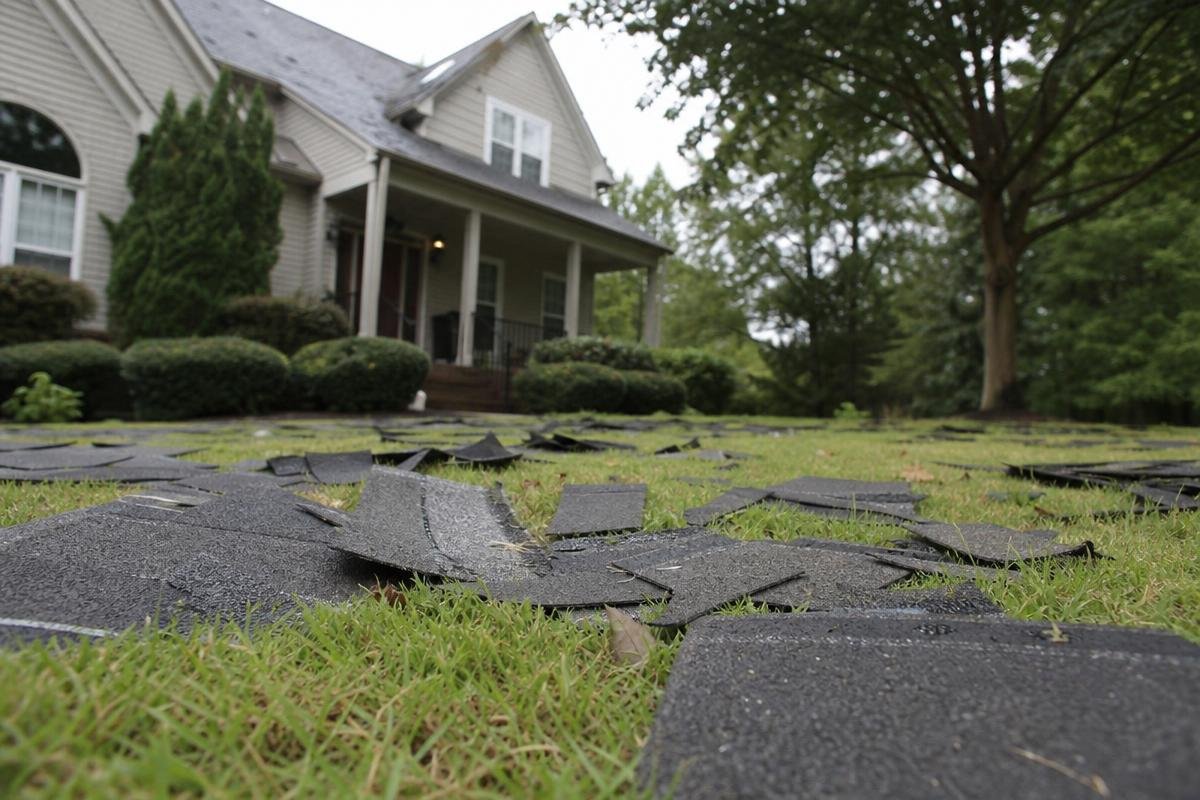
Spartanburg sits right in the path of fast-moving storm lines that accelerate off the Blue Ridge and push hard into the Piedmont. Add occasional winter ice storms and tropical remnant wind events tracking inland from the coast, and roofs here take a real beating. Neighborhoods like Converse Heights and Hampton Heights carry housing stock from the 1920s through the 1960s, with original or once-replaced roofing now at or past its service life.
For more home exterior topics, check out our company blog.
What Storm and Wind Damage Actually Looks Like on a Spartanburg Roof
After a bad storm passes through, most homeowners walk outside, look up, and think everything looks fine. That's the problem. A lot of the worst damage is subtle, or completely out of sight from the ground. Here's what to actually look for before you call anyone.
Missing and Lifted Shingles
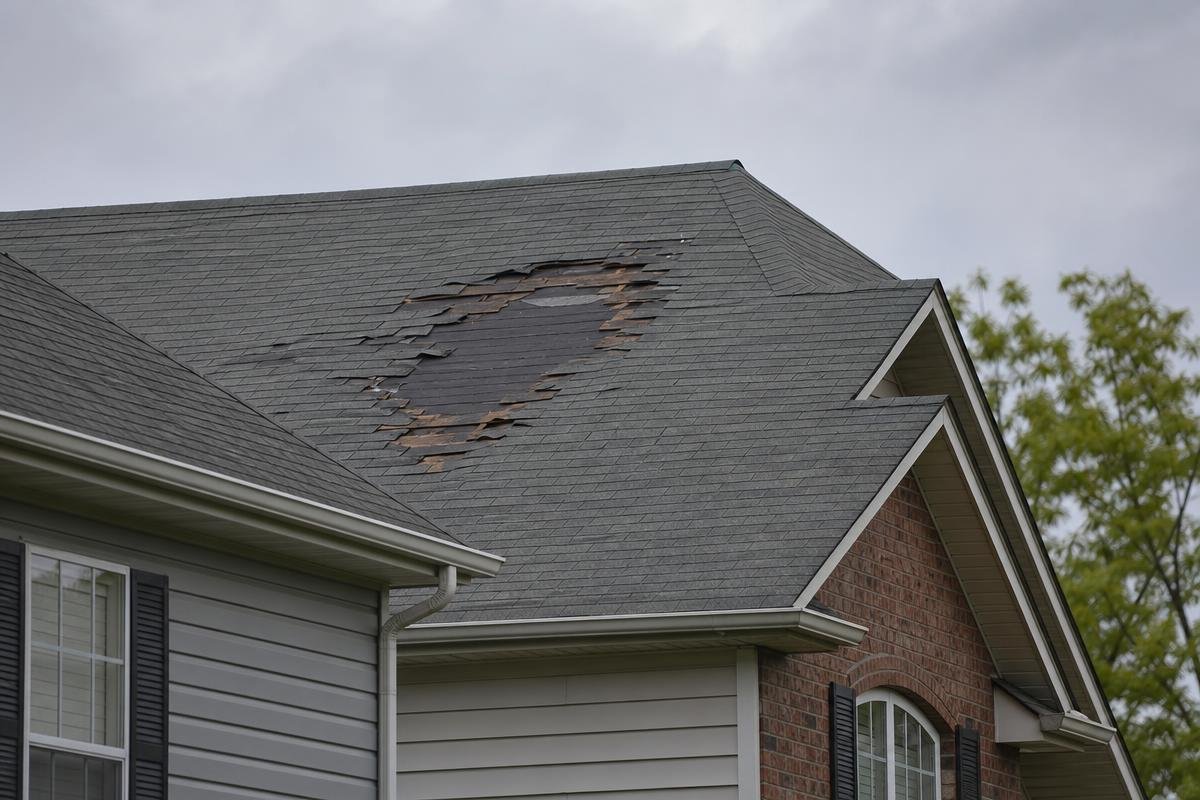
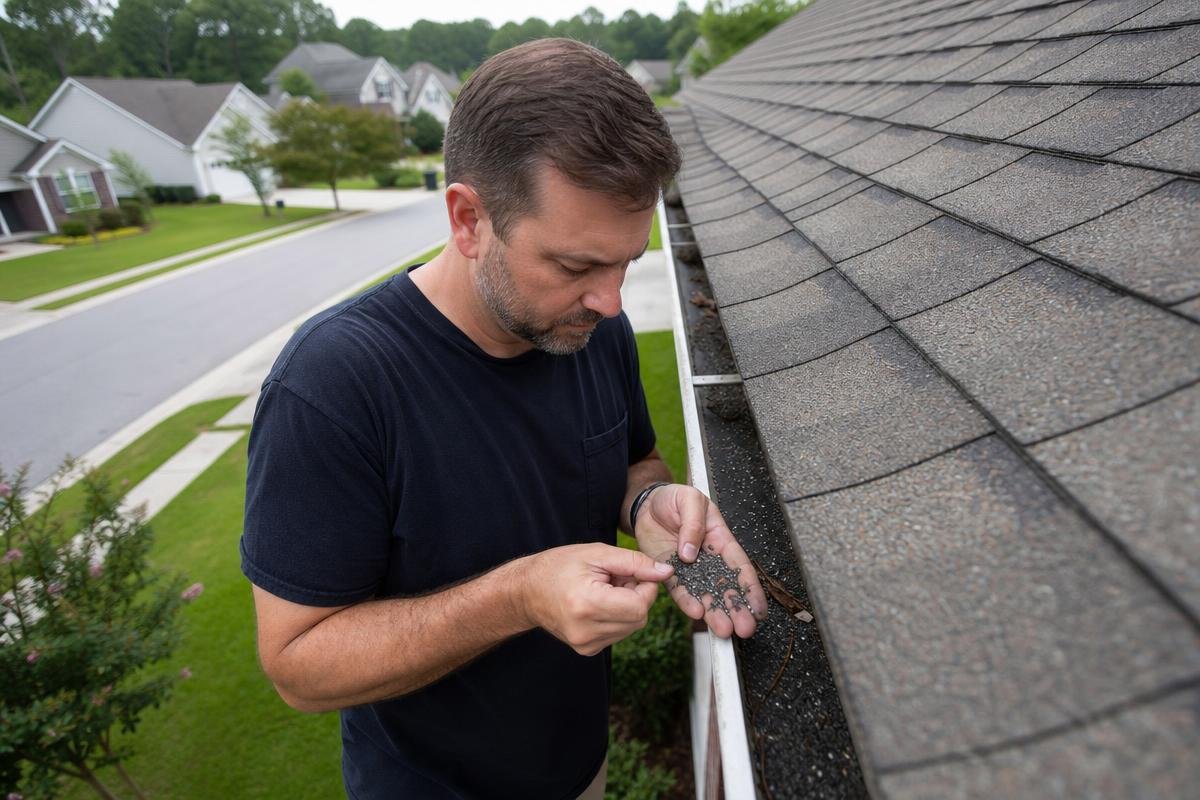
Wind uplift hits hardest at the edges and ridge line. That's where pressure differences are greatest. Upstate thunderstorm lines regularly push 50 to 60 mph gusts, and that's enough to break the adhesive seal strips on standard 3-tab shingles and even some architectural shingles.
From the ground, look for shingles that are visibly gone, curled at the corners, or lying flat but slightly raised. Pay close attention to the ridge cap and the first two rows above your gutters. Those spots go first. Older homes in areas like Converse Heights, where roofs may be closer to original age, are especially vulnerable.
Hail Damage: What to Look For From the Ground
You don't need to get on the roof to find your first clues. Check your aluminum gutters and downspouts. If you see fresh dents, hail hit your property hard enough to matter. Look at the base of your downspouts too. A pile of dark, sand-like granules means your shingles took a beating.
Hail events around the Upstate run marble- to golf-ball-sized during spring systems, with peak season running through late spring and early summer. The circular bruising or cracking on asphalt shingles is often invisible from the driveway. That's why a roof-level inspection matters after any significant storm. We cover homes across Boiling Springs, Inman, and Lyman, and we see this pattern every season.
Hidden Damage You Cannot See Without Getting Up There
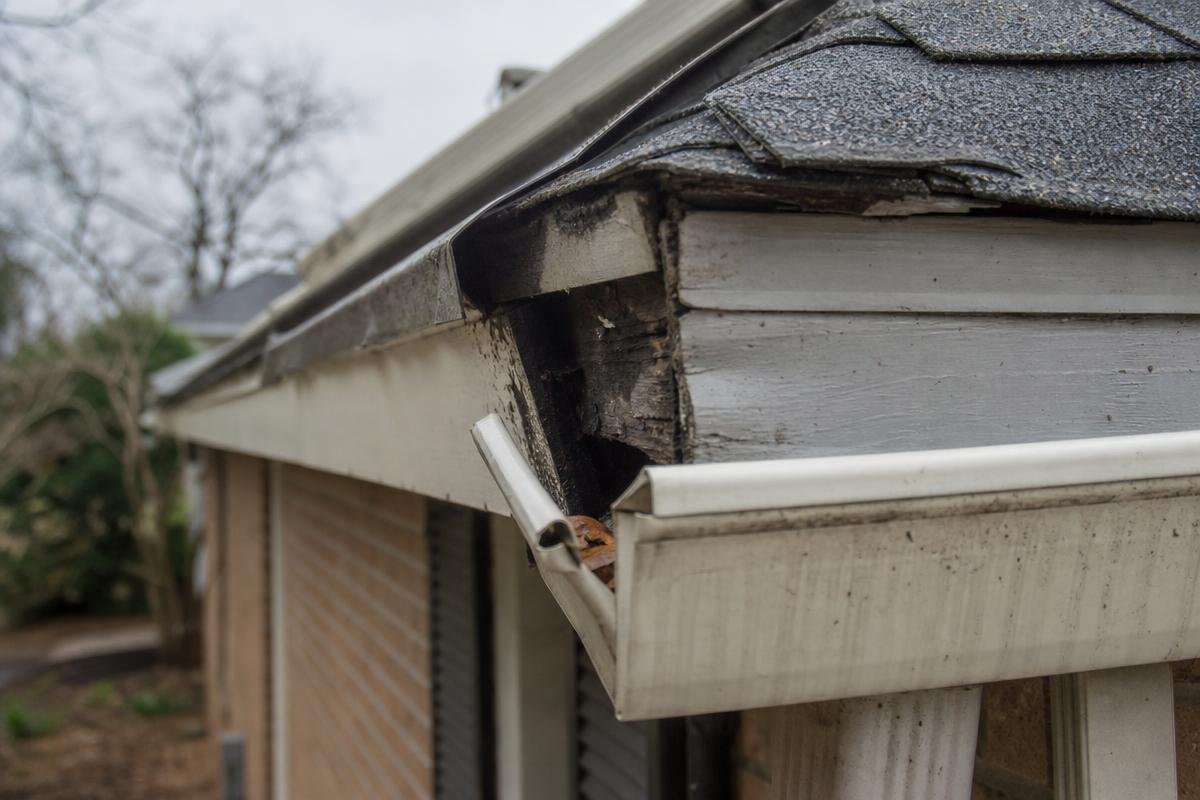
This is the category that catches homeowners off guard. Flashing can separate at chimneys, skylights, and pipe boots without any visible sign from below. EPDM pipe boot collars crack and degrade with UV exposure, and on homes 15 or more years old, they're often original. Ridge cap shingles can shift. Underlayment can tear beneath shingles that still look intact.
And that ceiling stain you noticed a week after the storm? Water doesn't pool immediately. It travels along rafters and decking for days before it shows up inside. By then, the damage is already done.
Repair vs. Replace: The Honest Answer for Spartanburg Homeowners
This is the question we get most often after a storm hits the area. And the honest answer depends on three things: the age of your roof, how much of it took the hit, and what's happening underneath the shingles.
When a Targeted Repair Is the Right Call
If your roof is under 15 years old and the damage is isolated, a repair almost always makes sense. We're talking about 3 to 5 missing shingles from a wind event, a single flashing failure at a chimney or pipe boot, or a short section of lifted ridge cap. Those are fixable problems.
One thing to know: matching shingles on a roof that's 8 to 12 years old can be tricky. Manufacturers discontinue colorways. A skilled roofing contractor can usually source a close match, but it takes some digging. We do it regularly across communities like Duncan and Moore.
The key check is the underlayment. If it's intact and the surrounding shingles are still holding granules, a repair holds up. See the full range of roofing and exterior services we offer to understand where repair fits into the bigger picture.
When the Damage Points Toward a Full Replacement
Age is the biggest factor. A roof over 20 to 25 years old with granule loss across more than one slope is not a repair candidate. Granules protect the asphalt from UV breakdown. Once they're gone, the shingles degrade fast, especially with Upstate SC's sun and storm frequency.
Neighborhoods like Beaumont Heights have housing stock from the 1920s through the 1950s. Many of those homes already have two shingle layers. South Carolina building code caps it at two. Adding a third is a code violation and puts real stress on aging roof decking.
Widespread hail bruising across the full field, sagging decking, or structural water damage all point the same direction: replacement.
Here's the straight talk. If a contractor recommends a repair on a roof that's 25 years old with granule loss across three slopes, get a second opinion. That's not a repair situation.
Not sure whether you need a repair or a full replacement? We'll get on the roof, check the decking, and give you a straight answer, not a sales pitch.
Schedule an InspectionCall Us NowHow the Roof Repair Process Works, Start to Finish
A lot of contractors will pull up to the curb, squint at your roof, and hand you a quote. That's not how we work. Real roof repair in Spartanburg SC starts with boots on the roof and a camera in hand, not a guess from the driveway. Here's exactly what to expect when you call our crew.
Step 1: Inspection and Damage Documentation
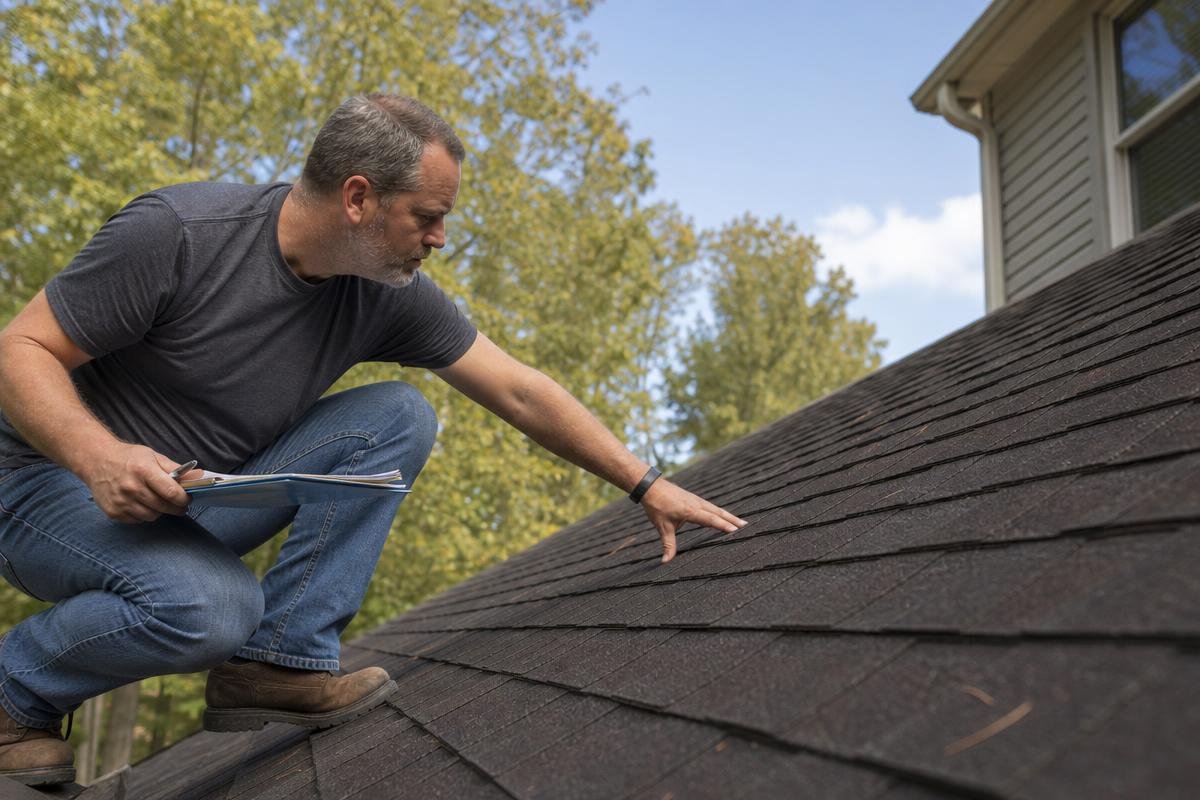
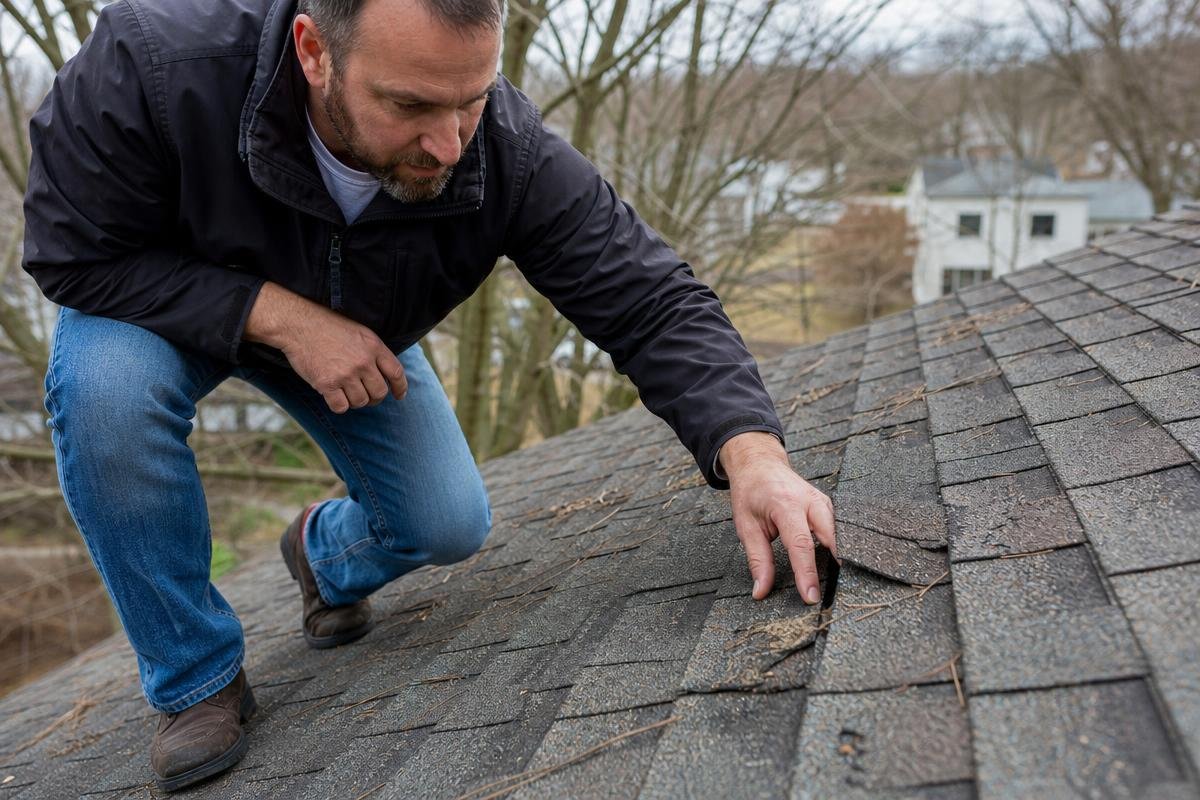
We get on the roof. Every time. We photograph every damaged area, measure the affected squares, and check the underlayment and decking beneath any lifted or missing shingles. That last part matters more than most homeowners realize.
Older homes in the historic corridors near downtown often have original 1x6 skip sheathing or early plywood beneath their shingles. Surface damage can look minor while the decking underneath is rotted or split. We check both. Every photo we take and every measurement we record goes straight into your file, which is exactly what your insurance adjuster will need.
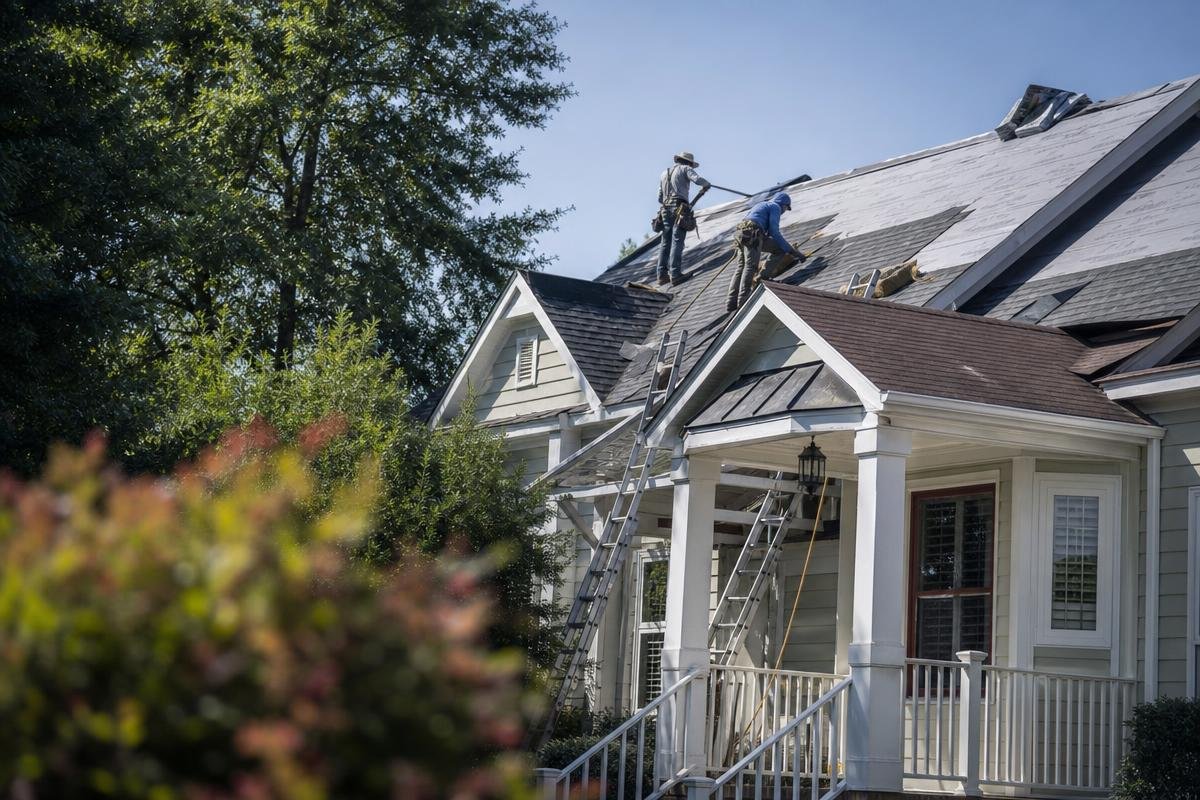
The crew that starts your project is the crew that finishes it. No details get lost between an estimator and a separate work team. Billy Tello, one of our lead crew members, is known by name among customers in communities like Inman and Lyman for clear communication and real problem-solving, not just showing up and swinging a hammer.
Step 2: The Repair Itself
We remove damaged shingles back to a clean break point. Then we inspect and replace any compromised underlayment, using synthetic underlayment like GAF FeltBuster as the current standard. New shingles go down with a minimum of four fasteners per shingle, per manufacturer specs and South Carolina building code.
Flashing gets re-sealed at every penetration in the repair zone. If your pipe boots are cracked or brittle, EPDM rubber degrades under UV over time and caulk alone is not a fix. The correct repair is a new boot with a proper flashing collar, installed with manufacturer-specified fasteners and sealants. Cutting corners there can void the warranty on surrounding field shingles. We don't cut corners.
Step 3: Final Walkthrough and Cleanup
When the work is done, we run a magnetic nail sweep across your yard and driveway. Then we walk the ground with you, point out exactly what was repaired, and tell you what to keep an eye on going forward. No vague answers. No disappearing act.
If you need emergency roof repair in Spartanburg after a bad storm, reach out to schedule your inspection and we'll get eyes on it fast. You can also review our Spartanburg exterior services page to see everything we cover in the area.
Filing a Homeowner's Insurance Claim for Storm Roof Damage in Spartanburg
Most standard South Carolina homeowner policies cover wind and hail as named perils. That's good news for homeowners across Spartanburg County, where spring and summer storm systems move across the area regularly. Knowing how to work the claims process correctly makes the difference between a smooth repair and a denied or underpaid claim.
What to Do in the First 48 Hours After a Storm
Document everything before you touch anything. Walk the yard and photograph shingles on the ground, dented gutters, and any visible damage from a safe ground-level vantage point. Go inside and photograph water stains on ceilings or walls. Do not throw away damaged materials before the adjuster visits. That debris is evidence.
Call your insurer promptly. Most SC policies require timely reporting, and the South Carolina Department of Insurance recommends notifying your carrier as soon as reasonably possible after a loss. Waiting too long can give the carrier grounds to question the claim. If water is actively getting in, an emergency tarp installation is the right call. Most policies cover emergency mitigation costs. This is a legitimate protective step, not an upsell.
Working With Your Adjuster
The adjuster works for the insurance company. They are not adversarial, but they are not your advocate either. Their job is to assess damage against your policy terms, nothing more.
Before the adjuster arrives, know whether your policy pays actual cash value (ACV) or replacement cost value (RCV). ACV pays the depreciated value of your roof. RCV pays the full cost to repair or replace it. Most policies written in the last decade carry RCV coverage, but verify yours before assuming. That one detail can mean thousands of dollars.
The most common dispute we see on Spartanburg hail claims is an adjuster classifying widespread granule loss as normal wear rather than storm impact. Clear, date-stamped photos of fresh gutter dents and matching bruise patterns across slopes are what push those claims across the line. Having a contractor's written inspection report and photos ready before the adjuster shows up strengthens your position. It gives the adjuster a line-by-line damage record to work from.
What a Good Contractor Does During the Claims Process
A reputable contractor provides a detailed written scope that matches the adjuster's damage report item by item. If there is a discrepancy in the assessment, we communicate directly with the adjuster to resolve it with documentation, not pressure.
One thing we will never do: promise to waive your deductible. Under South Carolina law, that is insurance fraud. Any contractor making that offer is not one you want on your roof. Reach out to schedule your inspection and we will have a written report ready before your adjuster ever sets foot on the property.
Storm hit your roof? Call us at (864) 505-4491 before you file. We will document the damage, prep your claim, and be there when the adjuster arrives.
Contact UsWhy Spartanburg Homeowners Call Our Team
When a storm moves across Duncan, Moore, or Roebuck and hits your roof, your gutters, and your siding all at once, you do not want to manage three different contractors. One call to American Siding & Construction LLC handles all of it. Roofing, siding, gutters, windows, exterior painting, we do the whole exterior. You can see our full range of exterior services in the Spartanburg area and know exactly what we cover before you call.
Billy Tello leads the crew personally, and customers name him by name in reviews. Words like "amazing," "reliable," and "clear communication" come up again and again. We have 142 five-star Google reviews, and most of them say the same thing: the work got done right and the communication never dropped off. That matters when you are dealing with storm damage and an open insurance claim at the same time.
We operate out of Greenville and serve Spartanburg County as a core part of our territory, so the travel radius is never an issue. The crew that starts your project is the crew that finishes it. No subcontractors. No handoffs. Nothing gets lost between an estimator and a work team. If a storm hit your roof and your siding in the same night, we handle both, and if you are not sure whether your siding needs a full replacement or just a repair, our post on when to repair vs. replace siding walks you through the honest answer.
We serve Roebuck, Duncan, Moore, and communities throughout the county. Give us a call, and chances are we have already worked on your street.
Roof Repair in Spartanburg, SC: Local Conditions That Make It Different
The Upstate SC Storm Pattern
The city center sits at roughly 900 feet elevation. Landrum and Campobello push closer to 1,100 feet as the terrain rises toward the Blue Ridge escarpment. That geography matters. Storm systems build over the mountains, then accelerate as they drop into the Piedmont, funneling straight through the county.
The result is more frequent high-wind thunderstorm events than you see in Columbia or Charleston. The National Weather Service issues severe thunderstorm warnings for this county regularly from April through September. Peak hail season runs April through June, with marble- to golf-ball-sized hail common during spring systems. January and February bring ice storms that add serious weight load to rooflines already stressed by age.
If you are in zip codes 29301, 29302, 29303, 29306, or 29307, you already know this. A bad spring here is not the same as a bad spring on the coast.
Older Housing Stock and Aging Rooflines
Neighborhoods like Glendale Acres, Hillbrook, and the older corridors near downtown have housing stock from the 1920s through the 1950s. Many of those homes have had one or two roof replacements over the decades, but the decking underneath may still be original 1x6 skip sheathing or early plywood, not modern OSB.
That is where contractors unfamiliar with this area get caught off guard. A storm lifts shingles, and what is underneath is soft, rotted decking that needs full replacement before new shingles can go down. We have seen it dozens of times. You cannot price a repair accurately without knowing what is under the surface.
We work across the county, including exterior services in Boiling Springs for homeowners in the northern part of the county who deal with the same storm exposure and many of the same aging roofline issues. Same conditions. Same approach.
Frequently Asked Questions
How much does roof repair cost in Spartanburg, SC?
Minor repairs, think one to five missing shingles or a single flashing replacement, typically run $300 to $800. Mid-range work covering a partial slope or multiple penetrations falls in the $800 to $2,500 range. Larger repairs involving significant decking damage can reach $3,000 to $5,000. If your claim is approved, the repair is priced to the adjuster's scope, and we work directly from that number.
How long does a storm damage roof repair take?
Most residential repairs wrap up in a single day. Larger jobs with decking replacement or damage across multiple sections may take two days. If you have active water intrusion, we can get an emergency tarp installed same-day or next-day while materials are sourced.
Can I stay in my home during a roof repair?
Yes, in almost every case. Roof work is exterior work. You will hear the crew and feel some vibration, but there is no reason to leave. The one exception is significant interior water damage that requires separate remediation work inside the home.
Will my homeowner's insurance cover wind and hail damage in Spartanburg?
Most standard South Carolina homeowner policies list wind and hail as named perils, so coverage is common. Whether your specific damage clears your deductible and meets the threshold for a covered loss depends on your policy. We walked through the full claims process earlier in this article, so refer back to that section for the details.
How do I know if my roof needs repair or full replacement after a storm?
Replacement flags include a roof over 20 to 25 years old, granule loss across multiple slopes, more than two existing shingle layers, or damaged decking underneath. Isolated damage on an otherwise sound roof usually points to repair. The only reliable way to know is a thorough on-roof inspection, not a look from the driveway.
Does your team handle both roofing and siding storm damage?
One call covers it. Roof, siding, gutters, trim, all of it. You can see examples of our completed storm damage projects in the gallery to get a sense of the full scope we handle regularly.
If a storm has hit your roof and you are not sure what you are dealing with, call us at (864) 505-4491 or reach out to schedule your inspection. Our team serves the communities across Spartanburg County, from Moore and Duncan to Roebuck and beyond. Billy and the crew will get on the roof, document what they find, and give you a straight answer about what it needs.
Ready to Get Started with American Siding & Construction LLC?
Call (864) 505-4491 to speak with our team directly. We're ready to answer your questions, walk you through your options, and help you find the right solution for your needs. Whether you're just starting to plan or ready to move forward, we'll make the process simple and stress-free.
Thinking about a project like this?
Get a free estimate